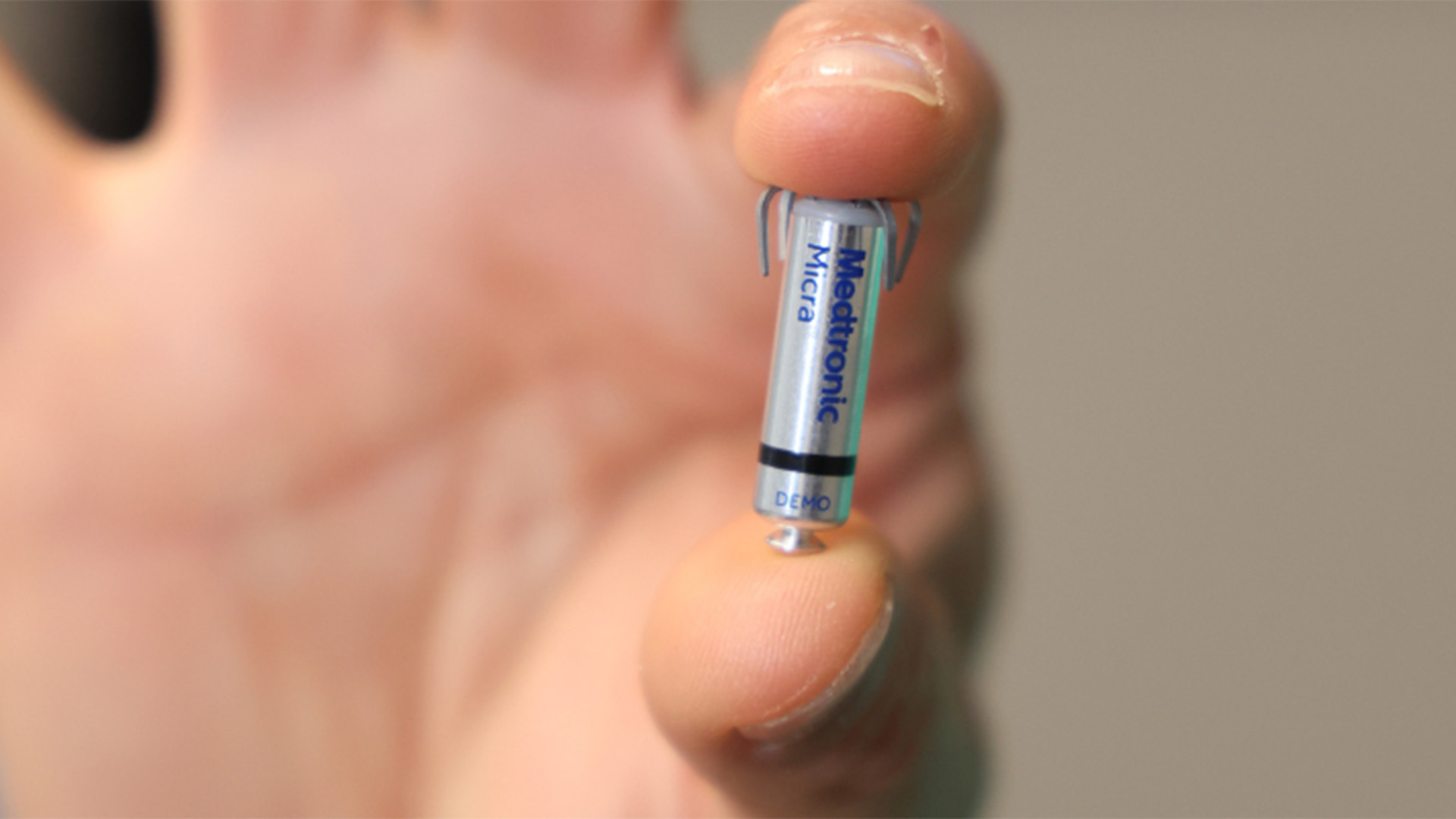
Clínica Cirúrgica de Carcavelos has taken another step forward in the innovation of cardiac care by performing its first implantation of a leadless pacemaker (MICRA), a state-of-the-art device designed to treat certain forms of bradycardia and disorders of the heart’s electrical conduction system. The procedure was successfully performed by the UNICARD JCS Electrophysiology and Arrhythmia team, led by Dr Daniel Matos, Cardiologist and Electrophysiologist at Joaquim Chaves Saúde.
This intervention represents an important milestone for cardiac pacing at Joaquim Chaves Saúde and further strengthens Clínica Cirúrgica de Carcavelos’ ability to provide patients with access to advanced technologies and specialised treatments for cardiac arrhythmias. The institution has also developed a specific protocol to ensure the safe performance of these procedures, in coordination with specialised cardiac surgery support.
What is a leadless pacemaker?
MICRA is a miniaturised pacemaker, approximately the size of a capsule, which is implanted directly inside the heart via the femoral vein, through the groin. Unlike conventional pacemakers, it does not require leads (wires) or the creation of a surgical pocket beneath the skin of the chest to house the generator.
When is it indicated?
This type of device is particularly indicated for patients requiring permanent cardiac pacing due to:
• Symptomatic bradycardia (an abnormally slow heart rate);
• High-grade atrioventricular block;
• Certain forms of sinus node dysfunction;
• Patients with permanent atrial fibrillation who require ventricular pacing;
• Situations in which implantation of a conventional pacemaker is more difficult or carries greater risks, particularly in the presence of venous obstruction, when preservation of venous access is required, or when there is an increased risk of infection.
What are the main differences compared with conventional pacemakers?
Conventional pacemaker
• Requires an incision in the chest
• Uses leads (wires) connected to the heart
• Has a generator placed under the skin, usually below the collarbone
• May leave a scar and a visible bulge
• Potential complications related to the leads
MICRA pacemaker
• Does not require a chest incision
• Does not use leads
• The entire device is positioned inside the heart
• Leaves no visible chest scar
• Eliminates complications associated with leads
Benefits for patients
Leadless technology offers several clinical and comfort-related advantages:
• Less invasive procedure;
• No chest scar;
• No visible bulge beneath the skin;
• Lower risk of lead-related complications, such as dislodgement, fracture or infection;
• Lower risk of complications involving the device pocket;
• Generally faster recovery;
• Fewer restrictions on arm movement following implantation;
• Greater comfort and improved cosmetic outcomes for patients.
According to the UNICARD JCS Arrhythmia team, the availability of this technology provides an additional treatment option for carefully selected patients, enabling an increasingly personalised approach tailored to each individual’s needs.
With the first MICRA leadless pacemaker implantation, Joaquim Chaves Saúde further reinforces its commitment to innovation, technological advancement and excellence in cardiac care, continuing to invest in solutions that contribute to better clinical outcomes and a more comfortable and safer experience for its patients.